
Creating a thirst for Curiosity
Welcome to a new kind of library

Earlier this week I attended an event at Humber Business Week showcasing the work of Curiosity.
Wearing a pair of outstanding pink sparkly ankle boots, host Rosie Millard introduced the project’s creative director Dave Lee who proceeded to sit on his tablet and, in doing so, managed to discombobulate the start of a short promotional film.
Once Dave got his seating arrangements sorted, the film and the rest of the afternoon went with a swing.
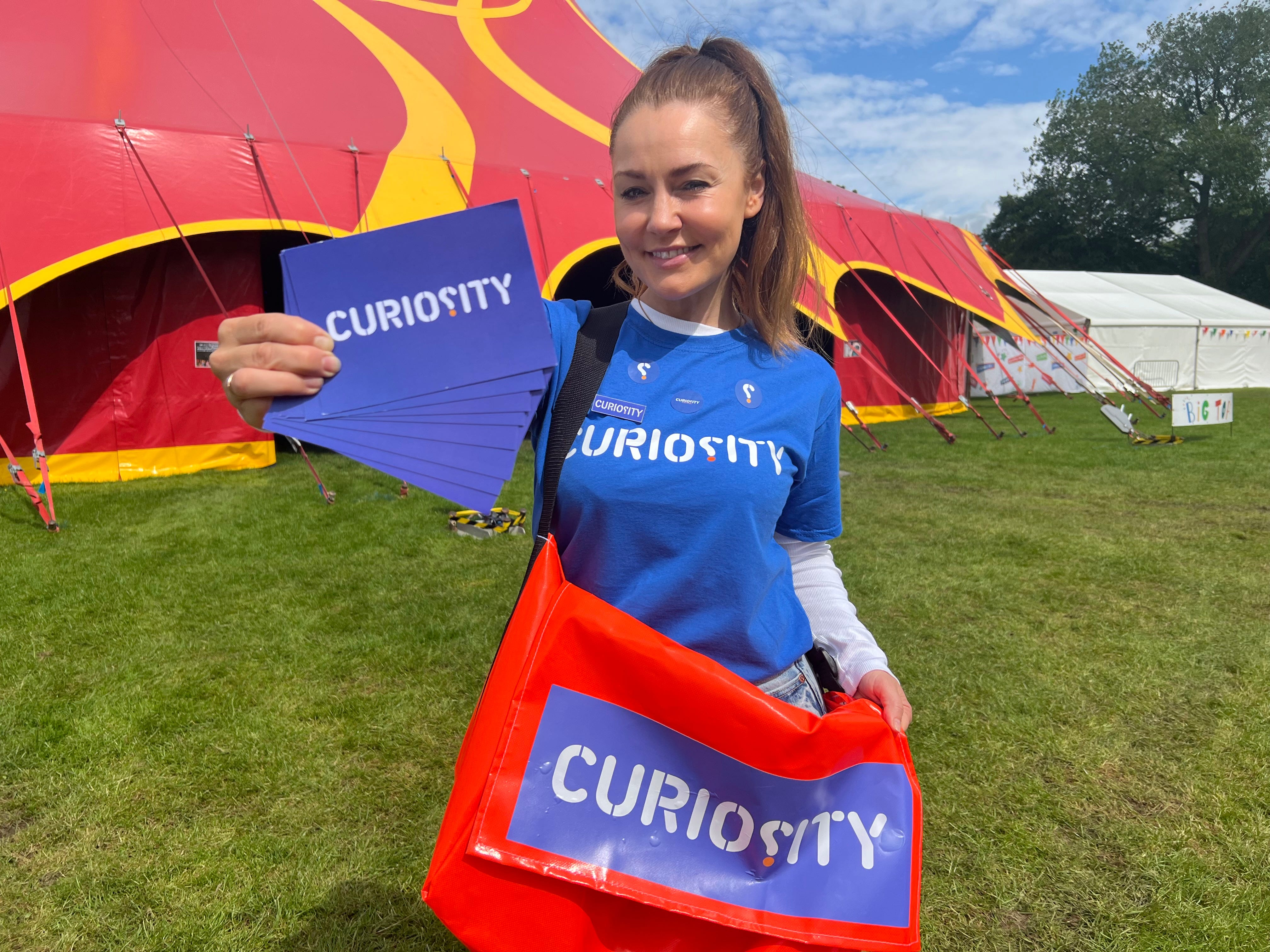
For those in the audience still wondering what it was all about, the stage was flanked by two giant banners featuring QR codes for Curiosity’s six different social media platforms.
For a moment, I wondered what Sir James Reckitt would have made of it all. I suspect he’d bloody love it.
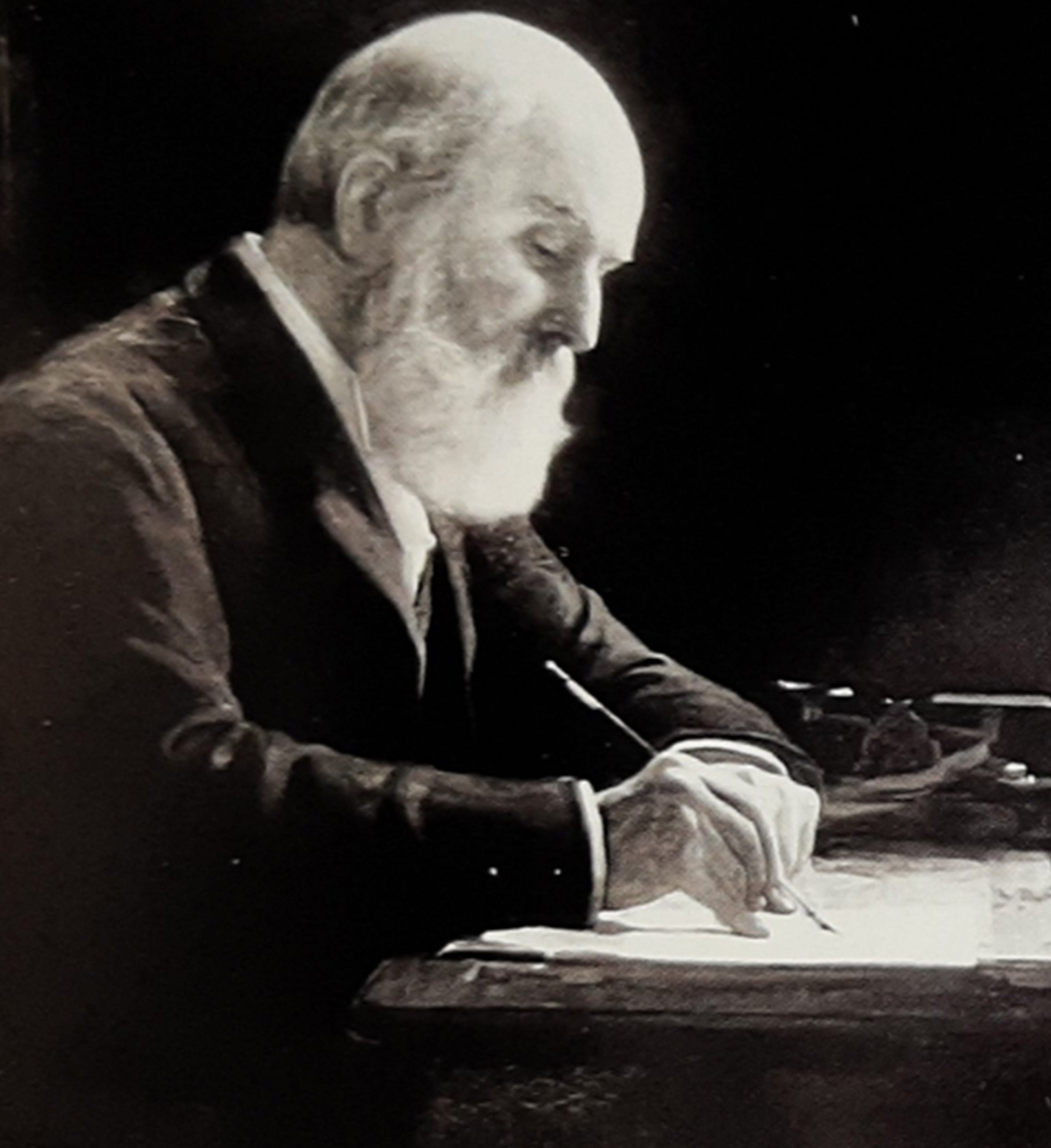
In the grand tradition of Victorian industrialists, Reckitt was also a local philanthropist.
While he made a fortune by turning the family-owned business manufacturing household cleaning products into a national brand, he also ploughed much of his wealth back into the community.
A 600-home urban village for his workers built as a non-profit venture, a hospital and an orphanage were just some of his philanthropic endeavours. Establishing and endowing Hull’s first public library was another.
“The main object of a free library is not only in satisfying a thirst for knowledge, but to create a thirst where it is now absent,” he said at the time.
The James Reckitt Library Trust has been one of his lasting legacies.
Established in 1892, it was originally intended to solely support that first public library named after Reckitt which was built on Holderness Road close to the family business.
Today the library itself is sadly now an apartment complex but the trust is still very much alive and kicking. It’s a registered charity with locally-based trustees who oversee the original endowment to develop public library provision throughout Hull.
While the city council owns and operates the city’s library service through its in-house company Hull Culture & Leisure, the trust’s independence gives it the flexibility to work with both the library service and other partner organisations on projects ranging from The Freedom Festival to the Children’s University.
When it came to considering how to mark the centenary of Reckitt’s death in 2024, the trust opted to do something bold.
It decided to breathe fresh life into that famous Reckitt quote mentioned above by championing a new mission to build a culture of curiosity in Hull, to make it a City of Curiosity.
Here’s an explanation of the move. Think of it as a manifesto.
There is a growing understanding that a city cannot be rebuilt, cannot be reimagined, through material things alone. New buildings, improvements to the environment, new jobs are all part of the journey, but it also needs community life, and community institutions to be built afresh, fractured communities to be revived.
Around the world, in societies where many of the building blocks of strong community life have been lost, where common shared spaces have shrunk, where technology has often isolated people or brought them into conflict, where trust in collective action and political processes is low, where people are fearful of change, where the boundaries between truth and falsehood have been blurred, the task of building strong, knowledgeable communities is vital.
The growth of a culture of curiosity is central to this; a defining characteristic of a ‘knowledgeable community’. A culture of curiosity exists where people remain genuinely curious about themselves, where they live and the world about them, are open to new knowledge, willing to listen, tolerant of different perspectives, slow to judge but also capable of discerning truth from misinformation. A culture where people feel empowered to keep asking questions and to assume agency in shaping their collective future. It represents a modern interpretation of James Reckitt’s desire to create a thirst for knowledge.
And so Curiosity was born.
A movement. A kaleidoscope of initiatives, events, activities, projects and organisations not tethered to a particular building but existing in the online world because, like it or not, that’s where most of us dwell these days, all brought together under one banner.
I was delighted to be asked by Dave to get involved early on before the whole thing took off. He made me an offer I couldn’t refuse.
My brief was to “write the kind of stuff you do”. The key ask was to come up with a question which might interest people and then attempt to answer it in an informative and entertaining way.
I’ve been contributing ever since and I’m glad to say the Curiosity family has grown a bit since then.
These days alongside old geezers like myself, broadcaster Burnsy, historian Robb Robinson and legendary Hull tour guide Paul Schofield, a thankfully much younger and the more talented bunch have joined gang.
In fact, one of the big aims going forward is to get more people of all ages and from all walks of life and from across the city to have a go at writing, presenting, filming and even producing their own material.
Ambitious? Yes but consider this factual nugget for a moment.
Over the last 18 months, Curiosity’s social media channels have become the fourth most popular in Hull with only the city’s three professional sports clubs achieving higher engagement - and then usually on match days.
As such, Curiosity content is already embedded in the online cultural and social environment of Hull.

Years ago, I used to get a kick when someone mentioned reading one of my newspaper stories. I even enjoyed watching folk flick through a paper on a bus or a train, knowing there was good chance they would be reading something I had written.
Today, I get the same buzz when someone says: “I enjoyed that Curiosity story you did the other day.”
As someone who started their craft armed with a notebook, pen, non-electric typewriter and a bottle of correction fluid, I still sometimes have to pinch myself about how technology has advanced since then.
They might have read it on a phone, a tablet, a laptop or a TV screen.
Typically, I’m told my Curiosity story got them thinking, got them wondering about things they never knew or might have once known but had forgotten about. Job done.
What makes it even more satisfying if that unlike my old newspaper days when my printed words invariably ended up being wrapped around a portion of fish and chips before being thrown in the bin, my bits for Curiosity as well as all the other fantastic contributions are there forever - or at least until someone switches the Internet off for good.
Not only that, each daily dollop of Curiosity comes with handy reference points for people to follow for more information about each particular topic, typically via their local library.
It’s like a doorway to another world.
As trustee Graham Chesters puts it: “Hull is not lacking in passion and imagination, nor in a belief in the power of community, and we are confident that the curiosity is there to be unleashed.”
At this week’s event held at Hull Truck Theatre, the city’s business community was invited to get onboard. It wasn’t really a pitch for sponsors, more of a rallying cry to think how joining the Curiosity world could work for them, their employers and their customers.
And there’s more to come beyond the daily content , the occasional podcast and pitching up at The Big Malarkey Festival.
Later this summer Curiosity will be at Humber Street Sesh with Dave already telling anyone prepared to listen that we’re going to be the first-ever non-music act on the festival’s bill. History in the making.
See you there if not before.
Yet another great piece Angus. (Why is it I never feel urged to comment to other stories about the area? Possibly because they dont seem to hit the button, or are woefully thin on localness)> Anyway; keep on, keeping on!
Great piece! What a remarkable man James Reckitt was. Great quote from him.